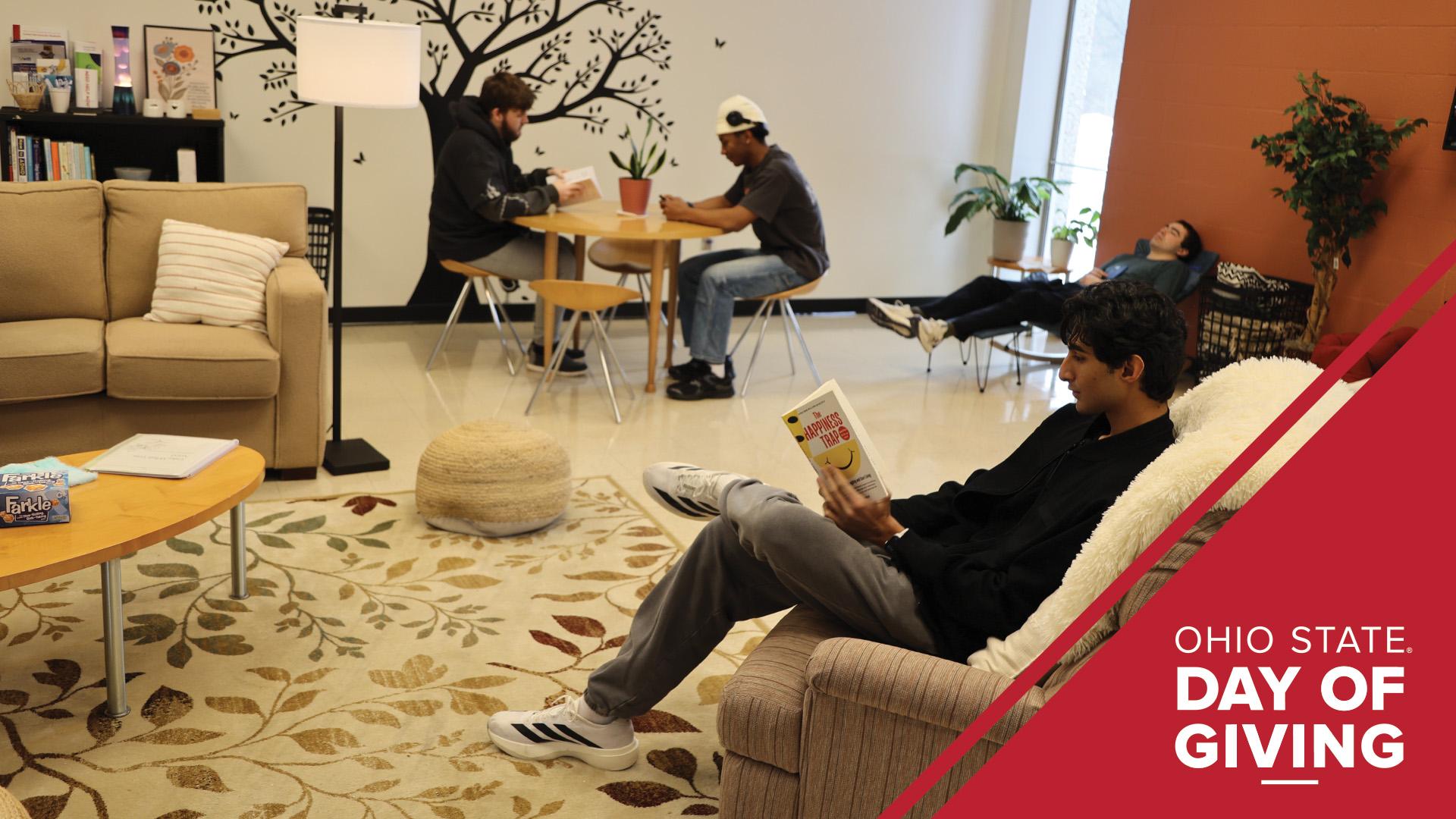
College has long been described as a transformational period, yet for many students, the transition into adulthood comes with significant emotional strain. Across the country, and here at Ohio State Lima, more students are reporting symptoms of anxiety, depression and increased stress. Many arrive on campus eager to begin their academic journey, yet find themselves struggling under the weight of financial pressures, new independence, and, in many cases, uncertainty about basic needs such as food, transportation and stable housing.
“Sometimes students walk in here because they don't know where else to go, or they're emotionally so stressed out,” said Samantha Haudenschield, PsyD, licensed psychologist and coordinator of Lima Counseling and Consultation Services. “If you don't have a place to sleep, or you don't know where you're going to get your next meal, it's really hard to focus on class.”
This reality has become increasingly common. Each semester, the counseling center provides an average of 100 psychotherapy sessions, serving approximately 31 unique students, and that number continues to trend upward as needs grow. The majority of students seeking help are first‑year students, who represent about 52 percent of those served, highlighting how challenging the first year of college can be.
A complex set of emerging needs
While anxiety and depression remain among the most common concerns, students also seek help for academic struggles, family issues and relationship challenges. Over her years on campus, Haudenschield has seen nearly every type of concern imaginable. A small but rising percentage of students require specialized mental health treatment beyond what can be provided on campus, reflecting the growing complexity of student needs.
Beyond emotional health, counselors are increasingly observing basic‑needs insecurity. Students frequently report concerns about housing, food access, affordability of transportation and a lack of stable routines. These stressors can significantly impact academic performance, campus engagement and the likelihood of persisting to graduation.
Building a foundation for student success
To meet these rising needs, the Ohio State Lima Health, Wellness, and Recreation Fund (#315436) supports a range of critical services, from individual counseling to wellness programming and preventative outreach. These services help students build coping strategies, manage stress, navigate academic challenges and connect with campus resources.
Investing in student wellness ensures that every student has the support they need to thrive not only academically, but personally and professionally. Mental and physical wellbeing are essential foundations for success, and strengthening these supports helps create a campus environment where all students can feel safe, connected and capable of meeting their goals.
A community role in student wellbeing
As student needs continue to grow in both volume and complexity, community support becomes even more vital. Donor contributions directly enable the campus to expand clinical capacity, enhance programming and ensure that students in need are seen quickly and compassionately.
The Day of Giving provides an important opportunity for the community to rally around student wellness and make a meaningful difference in students’ daily lives.
Day of Giving call to action
During this year’s Day of Giving, your gift to the Ohio State Lima Health, Wellness, and Recreation Fund (#315436) directly strengthens mental health and wellness support for students who need it most.
- Early Giving Challenge, March 23–April 11:
If 15 donors contribute to this fund, it unlocks an additional $1,000. - Day of Giving Power Hour, April 14, 3–5 p.m.:
If 5 donors give during this two‑hour window, an extra $1,500 will be unlocked.
Your participation, no matter the amount, helps unlock these challenge dollars and expands essential resources that support Ohio State Lima students’ wellbeing and success.
You can be one of the individuals who makes this impact possible. Together, let’s champion the health and future of our students.