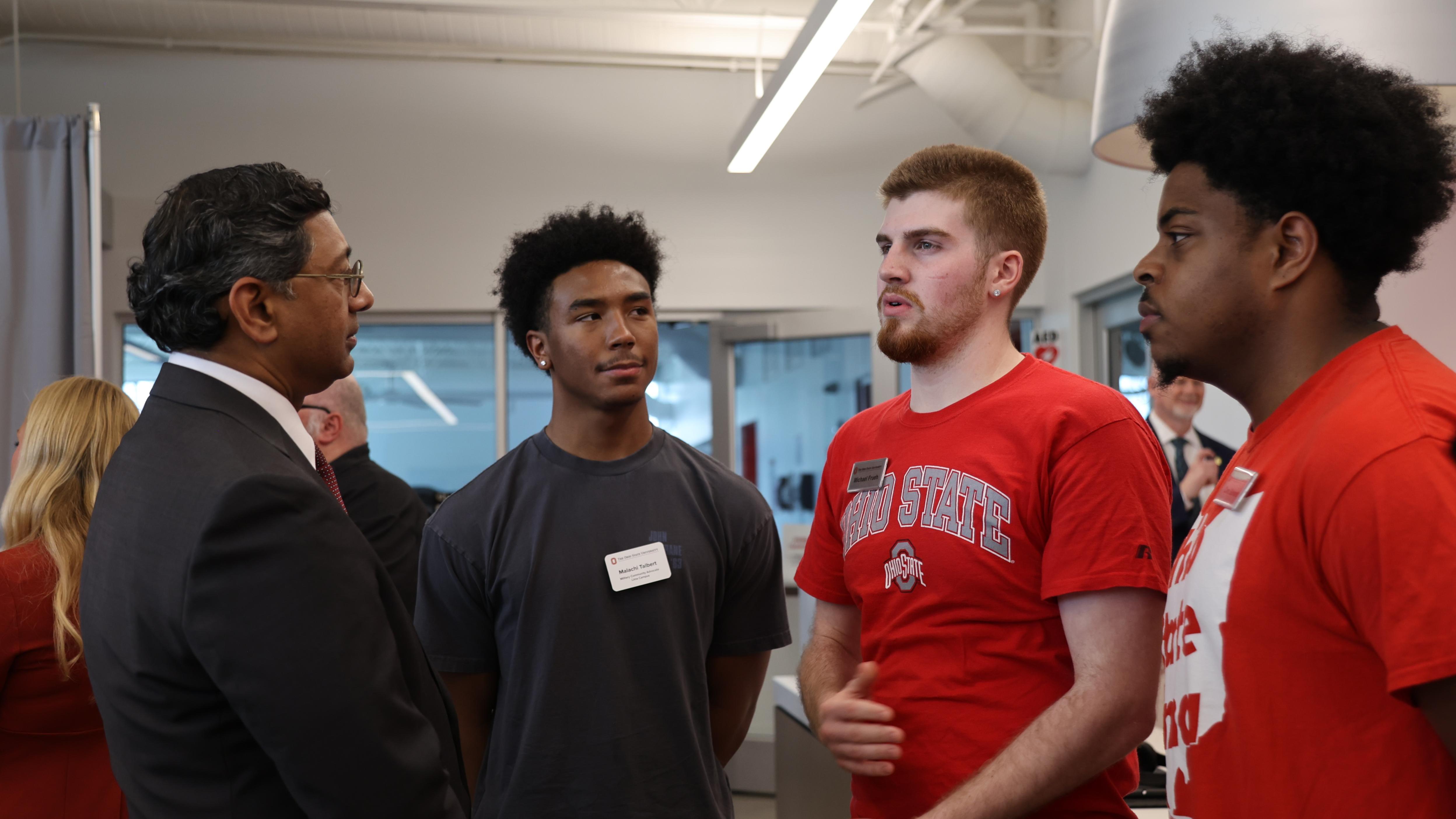

For Ohio State Computer Science and Engineering student Michael Frueh, the path to becoming an artificial intelligence engineer isn't just being paved in the classroom. It’s being forged through real-world experience, cross-functional collaboration and strong industry partnership.
Frueh is maximizing his educational journey at The Ohio State University by bridging theoretical coursework with hands-on application in the Honda Launchpad program and other experiential experiences.
Developed as a strategic pipeline initiative, the Honda Launchpad program is designed to engage students from their freshman year through graduation, establishing a robust framework for professional development within the automotive industry.
“The goal of the Honda Launchpad program is to prepare students for future career opportunities in the automotive industry,” said Derek Davis, operations manager for the Honda-Ohio State Partnership at American Honda Motor Co., Inc. “We view this opportunity to interact with students, get to know them as a person and understand what passions they have for their career and then match them with opportunities within Honda's vast ecosystem. This is the new era of value-added pipeline building.”
Frueh first discovered the initiative during a career fair at Ohio State Lima’s Engineering Education and Manufacturing Center. Drawn to the program’s emphasis on leadership development and hands-on innovation, he recognized an opportunity to grow professionally while collaborating with other highly motivated students.
As part of the beta cohort that launched in 2025, Frueh has experienced firsthand how the program’s foundational pillars come to life. The “explore” pillar introduces students to the automotive ecosystem through comprehensive facility tours, interactive engineer panels and intense industry challenge competitions. In one of the hands-on challenges, Frueh worked within a team of eight students tasked with designing and programming an autonomous factory pallet mover. The exercise perfectly simulated a fast-paced corporate engineering environment where cross-functional teams must collaborate to build and implement solutions.
This team-centric approach directly feeds into the program’s second pillar: “growth.” The programming intentionally emphasizes soft or durable skills, such as corporate communication, industry-specific terminology, and product development lifecycles. The goal is to ensure Launchpad participants are substantially better prepared for corporate cultures and career fairs than standard candidates.
Reflecting on the impact of these collaborative exercises, Frueh emphasizes the value of team-based development.
“Programs like Honda Launchpad help develop skills that go beyond the classroom such as collaboration, leadership and creative problem-solving,” Frueh said. “Working with students from different backgrounds and approaching challenges as a team reflects the type of environment I expect to work in professionally as an engineer.”
Beyond technical and soft skill-building, the “connect” pillar links students directly with Honda associates, industry mentors, subject matter experts and recruiters from Honda’s Talent Acquisition group. This structured networking positions students for multiple co-op rotations and internships, establishing a direct pipeline toward full-time entry-level careers at Honda post-graduation.
For Frueh, the Honda Launchpad program is a cornerstone of a broader, proactive approach to experiential learning. He simultaneously serves as an intern support engineer at Perry ProTech, where he works directly with IT systems and automation tools. This role allows him to apply his academic concepts directly to practical business operations, discovering how modern enterprises leverage technology to optimize efficiency.
Additionally, Frueh participated in the highly competitive AI Hackathon at the Columbus campus, where his team placed among the top eight winning teams out of 70 competitors. This achievement underscores his commitment to his ultimate career objective: developing intelligent systems and automation tools that solve real-world industry problems.
By combining rigorous coursework at Ohio State Lima with high-impact extracurricular opportunities, Frueh is building a comprehensive professional portfolio long before graduation.
“I believe the best learning happens when you combine classroom knowledge with real-world experience,” Frueh said. “Internships, leadership programs, and technical events allow me to apply what I’m learning while also developing professional skills and expanding my network.”
Frueh’s proactive mindset is driving his collegiate success. As he progresses through his educational journey at Ohio State, Frueh remains a prime example of how industry-backed academic partnerships can accelerate student potential and build the next generation of engineering leaders.